
Article · 2 min read
Sleep Apnea and High Blood Pressure
Sleep apnea is a leading cause of high blood pressure that is hard to treat. Learn how treating sleep apnea can lower your blood pressure.
General information, not medical advice. Read our disclaimer.
HEART · BLOOD PRESSURE
Sleep apnea and blood pressure at a glance
- Up to 80%Hard-to-treat high blood pressure with apnea
- 2–3×Higher blood pressure risk
- 2–7mmHgAverage drop with CPAP
- Sleep apnea is a major cause of hard-to-treat high blood pressure.
- CPAP can lower both the top and bottom blood pressure numbers.
- The drop is bigger when blood pressure is hard to treat.
- Hard-to-control blood pressure is a reason to test for sleep apnea.
See a sleep doctor if…
- Your blood pressure stays high even on several medicines
Obstructive sleep apnea (OSA) is one of the leading causes of resistant hypertension. This is high blood pressure that does not respond well to several medicines. Treating sleep apnea can lower your blood pressure, so knowing about this link is key to treating it well.
How does sleep apnea raise blood pressure?
- Oxygen drops — Oxygen drops again and again. Each drop sets off a rush of adrenaline (a stress hormone).
- Spikes — Blood pressure spikes each time breathing stops.
- No night-time dip — Blood pressure normally dips at night. With sleep apnea, this dip is lost.
- Inflammation — Long-term inflammation (irritation inside the body) damages blood vessel walls.
How common is the link?
Sleep apnea is a major cause of high blood pressure that is hard to treat.
- Hard-to-treat blood pressure — Up to 80% of people with resistant hypertension have sleep apnea.
- Higher risk — Sleep apnea raises the risk of high blood pressure 2-3 times.
Can treating sleep apnea lower your blood pressure?
Yes. CPAP therapy (a machine that keeps your airway open with air pressure) can lower blood pressure. Treating OSA can lower both the top number (systolic) and the bottom number (diastolic) of your blood pressure.
Who should be tested?
People whose blood pressure is hard to control should be tested for sleep apnea.
HEART · HOW IT HAPPENS
How sleep apnea raises blood pressure
Oxygen drops
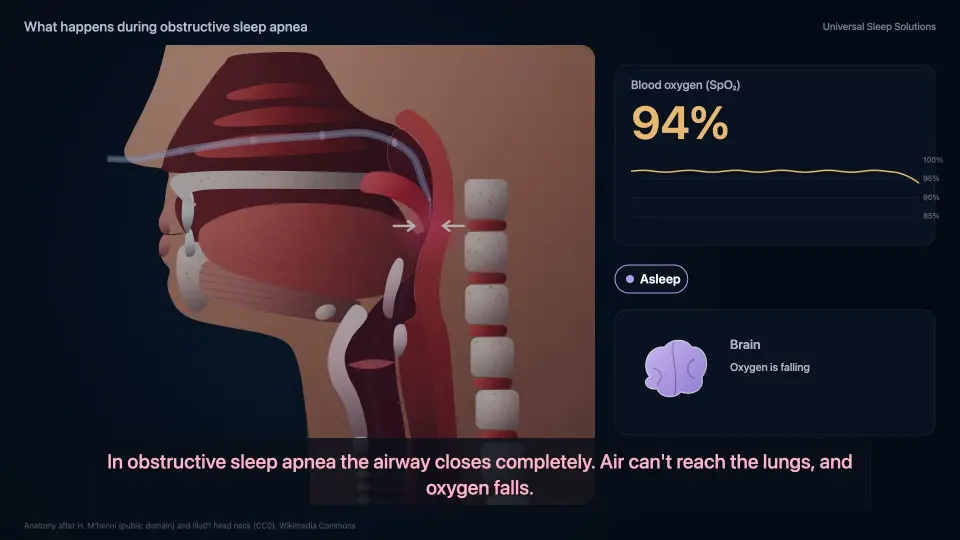
Oxygen drops again and again during sleep.
Adrenaline rush
Each drop sets off a rush of adrenaline, a stress hormone.
Pressure spikes
Blood pressure spikes each time breathing stops.
Key pointNo nighttime dip
The normal nighttime dip in blood pressure is lost.
Vessel damage
Long-term inflammation damages blood vessel walls.
Watch and learn
Common questions
Can CPAP lower blood pressure?
Trusted medical sources
This page follows guidance and research from leading medical organizations.
Further reading
- AASMObstructive Sleep Apnea
- NHLBISleep Apnea Information
- Mayo ClinicOSA Overview
- NIHSleep Apnea
- AASMObstructive Sleep Apnea
- NHLBISleep Apnea Treatment