
Article · 2 min read
Weight Loss and Sleep Apnea
Losing weight can greatly improve sleep apnea, or even make it go away. Learn how weight affects your breathing in sleep and your treatment.
General information, not medical advice. Read our disclaimer.
SLEEP APNEA · WEIGHT
Weight loss and sleep apnea at a glance
- 10%Weight loss
- 26%About this much lower AHI
- 10–15%Loss that may end mild apnea
- Extra weight is the biggest changeable risk for sleep apnea.
- Exercise helps sleep apnea even before you lose weight.
- Keep using CPAP while you lose weight.
- Your sleep doctor may change your pressure as you lose weight.
- Don't stop treatment until a follow-up sleep study shows improvement.
Losing weight is one of the best lifestyle changes for sleep apnea. Even a moderate amount of weight loss can lower your AHI (how many times per hour your breathing stops or gets shallow) a lot. Keep using CPAP while you lose weight, and see your sleep doctor again as your weight changes.
How are weight and sleep apnea linked?
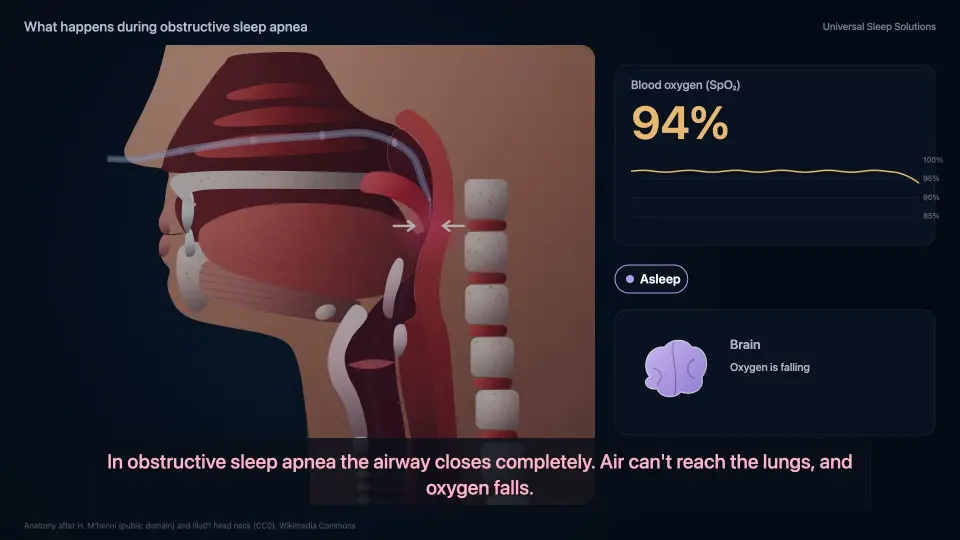
Extra weight is the biggest risk for obstructive sleep apnea that you can change. Fat around your upper airway makes the breathing passage narrower. Belly fat makes your lungs hold less air. Both make it more likely that your airway will close during sleep.
How much does weight loss help?
- 10% weight loss — Losing 10% of your weight can lower your AHI by about 26%.
- 10% to 15% weight loss — This may make mild sleep apnea go away fully.
- Weight-loss surgery — People who have weight-loss surgery (bariatric surgery) often see big improvements.
What are some ways to lose weight?
- Make a plan — Work with your doctor on a plan you can stick with.
- Get food advice — Think about seeing a nutrition expert.
- Move more — Exercise often. It helps sleep apnea even before you lose weight.
- Surgery — Weight-loss surgery may be an option if you have severe obesity and qualify.
Should you keep using CPAP while you lose weight?
Yes. Keep using your CPAP machine while you work on losing weight. As you lose weight, your sleep doctor may change your air pressure settings. Do not stop treatment until a follow-up sleep study shows you have improved.
SLEEP APNEA · WEIGHT
How extra weight blocks breathing
Fat near airway
Fat around your upper airway narrows the breathing passage.
Belly fat
Belly fat makes your lungs hold less air.
Airway closes
Both make your airway more likely to close in sleep.
Key point
Watch and learn
Common questions
Can losing weight cure sleep apnea?
Trusted medical sources
This page follows guidance and research from leading medical organizations.
Further reading
- AASMObstructive Sleep Apnea
- NHLBISleep Apnea Information
- Mayo ClinicOSA Overview
- NIHSleep Apnea
- AASMObstructive Sleep Apnea
- NHLBISleep Apnea Treatment