
Article · 2 min read
CPAP Alternatives for Sleep Apnea
Can't use CPAP? Look at proven options such as oral appliances, Inspire therapy, positional therapy, and surgery.
General information, not medical advice. Read our disclaimer.
SLEEP APNEA · TREATMENT
CPAP alternatives at a glance
- 10%Weight loss that can greatly help
- CPAP is the best-proven treatment, but not the only one.
- Oral appliances work best for mild to moderate sleep apnea.
- Inspire is for moderate to severe apnea when CPAP fails.
- The best choice depends on severity and your airway shape.
- Talk about all your options with your sleep specialist.
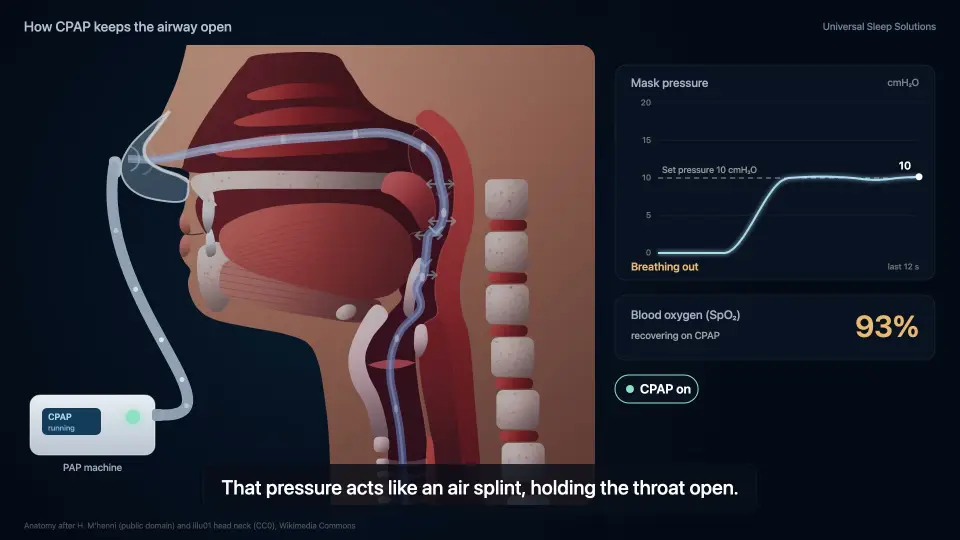
CPAP is a machine that blows air through a mask to keep your airway open. It is the gold standard (best proven) treatment for obstructive sleep apnea (OSA), but it is not the only option. If CPAP has been hard for you, several proven options can treat your sleep apnea well.
What are oral appliances?
These are custom-fitted mouth guards. They move your lower jaw and tongue forward to keep your airway open. They work best for mild to moderate OSA. A dentist trained in dental sleep medicine fits them.
What is Inspire therapy?
Inspire is a device placed inside your body, so it is a surgical option. It stimulates the hypoglossal nerve (the nerve that moves your tongue) to keep your airway open. It is for people with moderate to severe OSA who cannot get used to CPAP.
Can sleep position or weight loss help?
- Positional therapy — Some people have sleep apnea mostly when they sleep on their back. Special devices or pillows help you sleep on your side.
- Weight management — Losing even 10% of your body weight can greatly improve mild to moderate sleep apnea. It may even make it go away.
What surgeries can help?
- UPPP — Removes extra tissue from the throat
- Jaw advancement (MMA) — Moves the upper and lower jaw forward
- Tongue reduction — Makes the tongue smaller
- Nasal surgery — Helps air flow through the nose
How do you choose the right option?
The best option depends on how severe your sleep apnea is. It also depends on the shape of your airway. Talk about all your options with your sleep specialist.
Watch and learn
Common questions
What are the best CPAP alternatives?
Can I treat sleep apnea without a machine?
Trusted medical sources
This page follows guidance and research from leading medical organizations.
Further reading
- AASMCPAP Therapy
- Sleep FoundationCPAP Machines
- NHLBIPAP Therapy Overview
- AASMObstructive Sleep Apnea
- NHLBISleep Apnea Information
- Mayo ClinicOSA Overview
Part of our sleep apnea management service.