
Service
Sleep apnea management
CPAP, oral devices and surgical referrals. Board-certified sleep medicine for children, teens and adults.
General information, not medical advice. Read our disclaimer.
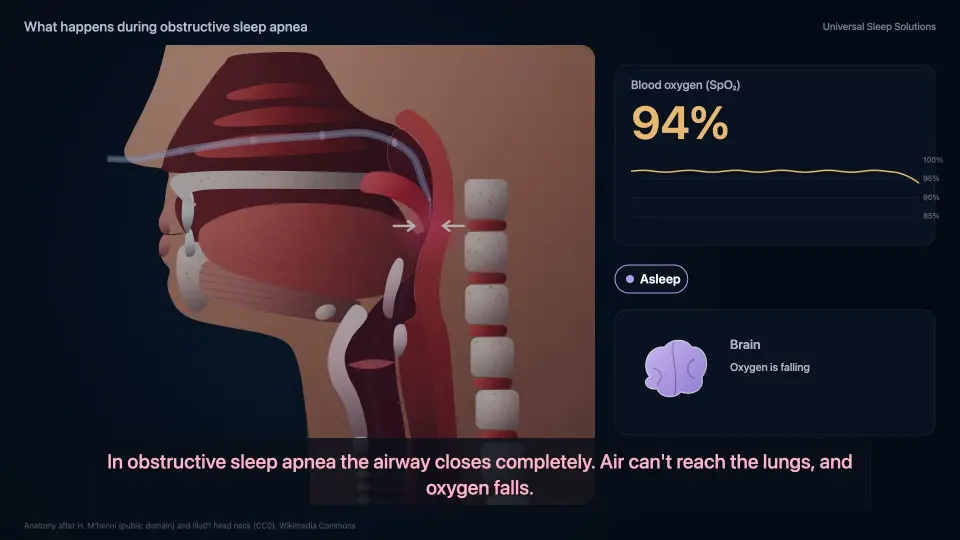
Obstructive sleep apnea is a common sleep problem. During sleep, the airway in your throat closes again and again. Each time, your breathing stops or gets shallow, and your body wakes a little to breathe again. At Universal Sleep Solutions in Leander, Texas, Dr. Minal Patel finds sleep apnea and treats it in adults and children.
What are the signs of sleep apnea?
- Loud snoring — snoring most nights
- Pauses in breathing — that someone sees while you sleep
- Gasping or choking — waking up short of breath
- Daytime sleepiness — feeling tired even after a full night in bed
- Morning headaches — and a dry mouth when you wake up
- Trouble focusing — and mood changes
See more in sleep apnea symptoms.
How do we find out if you have sleep apnea?
Dr. Patel talks with you about your sleep and your health. Then a sleep study measures your breathing at night. Many adults can do a home sleep test. Others need a night in our sleep lab.
How is sleep apnea treated?
Treatment depends on how strong your sleep apnea is, your health and what you prefer. Choices include:
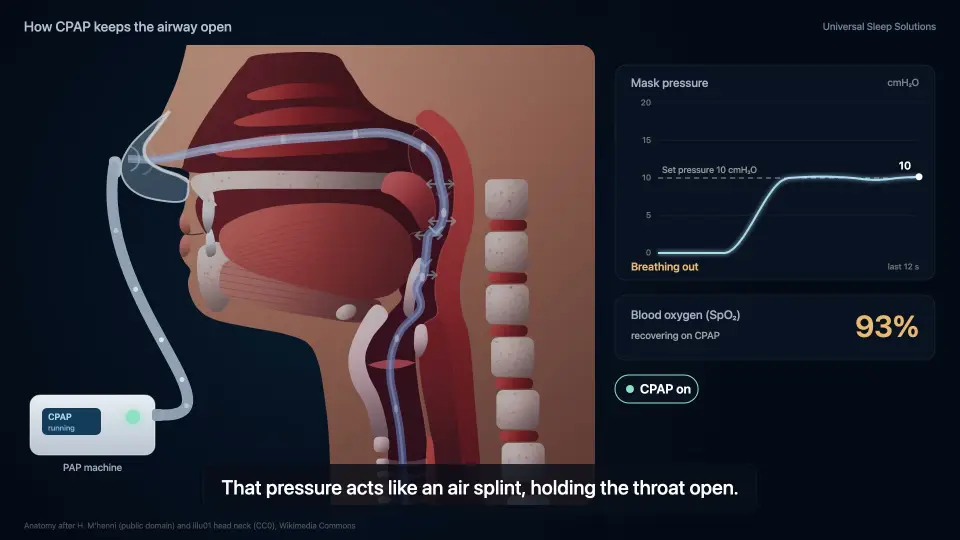
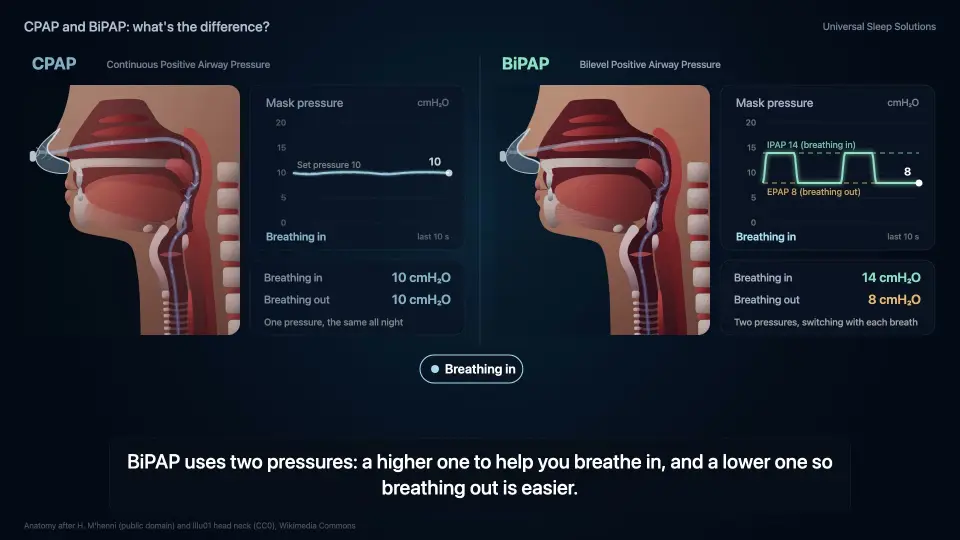
- CPAP — A machine that blows gentle air through a mask to keep your airway open. It is the most common treatment.
- BiPAP — A machine like CPAP with two pressures, one for breathing in and a lower one for breathing out.
- Oral appliance — A mouth guard made by a dentist that moves your lower jaw forward. It can help some people with mild to moderate sleep apnea.
- Inspire — A small implant that keeps the airway open. It is for some people who cannot use CPAP.
- Surgery — We refer you to a surgeon when surgery may help.
- Weight and habits — Losing extra weight and changing sleep position can help some people.
What does ongoing care look like?
Treatment works best when it fits you well. We check how you are doing with CPAP, help with mask fit and problems, and change your plan if needed. We also work with specialists, such as dentists and surgeons, when you need them.
How do you get started?
- Pre-register online — Fill out the secure form on our patient portal. We will contact you to set up your visit.
- Ask your doctor — Your doctor can fax a referral to (877) 569-2885.
- Call us — Have questions first? Call (512) 931-1575, Monday to Friday, 8:30 AM to 5:00 PM.
Watch and learn
Common questions
Is sleep apnea dangerous?
What if I can't use CPAP?
How is sleep apnea diagnosed?
What happens if sleep apnea goes untreated?
Can children have sleep apnea?
Trusted medical sources
This page follows guidance and research from leading medical organizations.
Further reading
- AASMObstructive Sleep Apnea
- NHLBISleep Apnea Information
- Mayo ClinicOSA Overview
- NIHSleep Apnea
- AASMObstructive Sleep Apnea
- NHLBISleep Apnea Treatment