
Guide · 2 min read
Sleep Apnea & Weight Loss – Breaking the Cycle
Weight and sleep apnea are closely linked. Losing weight can greatly improve your sleep apnea — or even cure it.
General information, not medical advice. Read our disclaimer.
SLEEP APNEA · WEIGHT
Weight and sleep apnea at a glance
- 70%People with OSA who are overweight
- 6×OSA risk after 10% weight gain
- 10–15%Weight loss that can greatly help
- Weight is the strongest changeable risk for sleep apnea.
- Poor sleep and weight gain make each other worse.
- Exercise helps sleep apnea even without weight loss.
- Moderate weight loss can cure some mild sleep apnea.
- Weight loss works best together with CPAP.
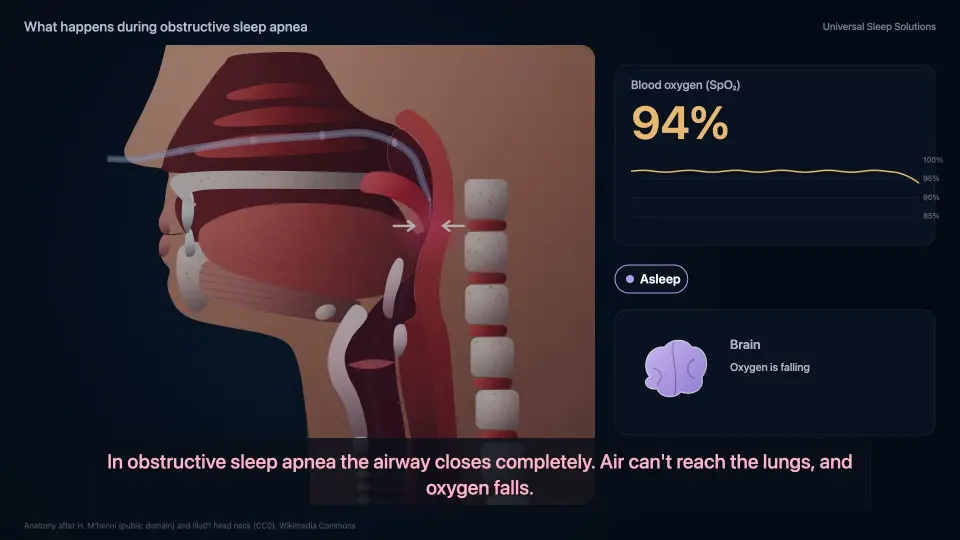
Obesity is the strongest risk factor for obstructive sleep apnea that you can change. Extra weight puts fat around the upper airway. This narrows the airway and makes it more likely to collapse during sleep.
How are weight and sleep apnea linked?
- 70% of people with OSA — 70% of people with obstructive sleep apnea (OSA) are overweight or obese.
- Gaining 10% of your weight — This raises your OSA risk 6 times.
- Fat around the neck and tongue — This narrows the airway.
- Belly fat — This makes your lungs hold less air, so breathing gets worse.
Why do sleep apnea and weight gain feed each other?
Sleep apnea and weight gain make each other worse:
- Hunger hormones — Poor sleep raises hunger hormones (ghrelin). It lowers the hormones that make you feel full (leptin).
- Physical activity — Feeling tired in the day means less physical activity.
- Insulin resistance — Not getting enough sleep raises insulin resistance. That means your body responds less well to insulin, the hormone that controls blood sugar.
- CPAP — CPAP is a machine that blows air through a mask to keep your airway open. CPAP treatment can help break this cycle by improving your sleep.
What are some ways to lose weight?
- Diet changes — Such as a Mediterranean diet or eating fewer calories
- Regular exercise — Exercise improves OSA even if you don't lose weight
- Behavior counseling — Help with changing habits
- Medical weight management — When lifestyle changes are not enough
- Bariatric surgery — Weight-loss surgery for severe obesity with OSA
Should you use CPAP while you lose weight?
Yes. Weight loss works best together with CPAP therapy. While you lose weight, CPAP protects you from the health effects of untreated sleep apnea.
Call (512) 931-1575 to talk about a full treatment plan.
SLEEP APNEA · WEIGHT
The cycle that feeds itself
Poor sleep
Sleep apnea breaks up your sleep.
More hunger
Hunger hormones rise and fullness hormones drop.
Less activity
Feeling tired in the day means less activity.
Insulin resistance
Too little sleep makes your body respond less to insulin.
CPAP breaks it
CPAP improves your sleep and can help break the cycle.
Key point
Watch and learn
Common questions
How much weight do I need to lose to improve sleep apnea?
Does sleep apnea make it harder to lose weight?
Trusted medical sources
This page follows guidance and research from leading medical organizations.
Further reading
- AASMObstructive Sleep Apnea
- NHLBISleep Apnea Information
- Mayo ClinicOSA Overview
- NIHSleep Apnea
- AASMObstructive Sleep Apnea
- NHLBISleep Apnea Treatment
Part of our sleep apnea management service.