
Article · 2 min read
What Is CPAP Therapy?
CPAP is the gold standard (best proven) treatment for obstructive sleep apnea. Learn how it works, why it works, and what to expect.
General information, not medical advice. Read our disclaimer.
CPAP · THE BASICS
CPAP therapy at a glance
- 1–2weeksMost people adjust
- 2–4weeksFull benefits develop
- CPAP is the most effective treatment for obstructive sleep apnea.
- Pressurized air through a mask keeps your airway open.
- Benefits include better sleep, more energy and lower blood pressure.
- CPAP treats sleep apnea but does not cure it.
- Consistent use is key to the best results.
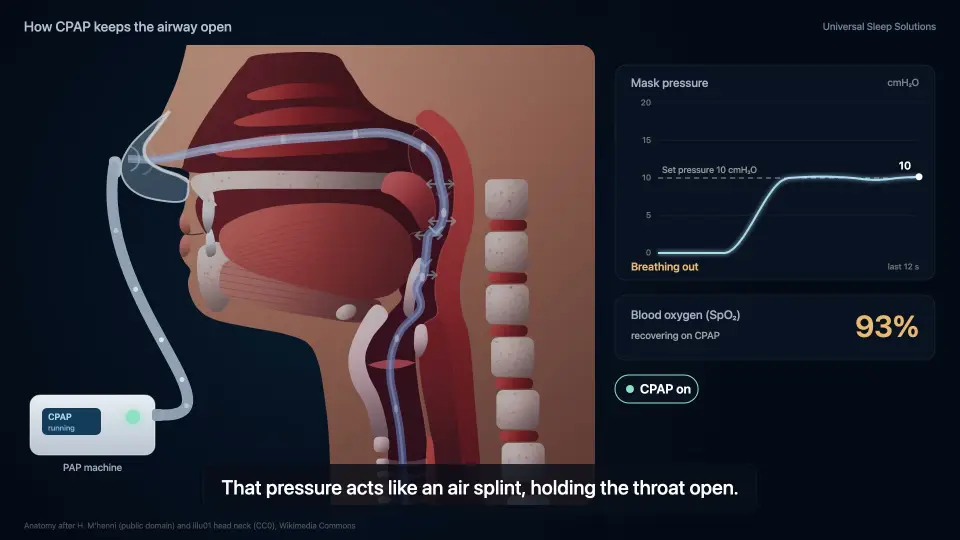
CPAP (continuous positive airway pressure) therapy is the most widely prescribed and most effective treatment for obstructive sleep apnea. A CPAP machine sends a steady stream of air under pressure through a mask you wear while you sleep. This keeps your airway open and stops the collapses that cause apnea events (pauses in breathing).
How does CPAP work?
The idea is simple but powerful. A small bedside machine pulls in room air and raises its pressure. It sends the air through a tube to a mask that fits over your nose, mouth, or both.
This steady air pressure acts like an air splint. It holds your airway open so you can breathe freely all night.
What are the parts of a CPAP system?
- CPAP machine — The main unit that makes the air pressure.
- Humidifier — Adds moisture to the air to prevent dryness.
- Tubing — Connects the machine to the mask.
- Mask — Sends air to your nose and/or mouth (many types are available).
- Filter — Cleans the air before it reaches you.
What types of CPAP machines are there?
- Fixed-pressure CPAP — Gives one steady pressure level all night.
- Auto-CPAP (APAP) — Adjusts the pressure on its own based on your breathing needs through the night.
- BiPAP — Gives different pressures for breathing in and breathing out.
What are the benefits of CPAP?
- Fewer breathing pauses — Stops or greatly reduces apnea events.
- Better oxygen — Improves blood oxygen levels during sleep.
- More energy — Reduces daytime sleepiness and improves energy.
- Blood pressure — Lowers blood pressure.
- Heart health — Reduces cardiovascular (heart and blood vessel) risk.
- Mind and mood — Improves mood, focus, and memory.
- Snoring — Reduces snoring.
How do you get started with CPAP?
Your sleep specialist will prescribe a pressure setting based on your sleep study results. Or they may prescribe an auto-adjusting machine.
You'll work with a CPAP equipment provider to choose a mask that fits comfortably. They will also teach you how to use and care for your equipment.
How can you succeed with CPAP?
Most patients get used to CPAP within 1-2 weeks. Using it every night is key to getting the best results.
- Use it every time you sleep — Use your CPAP every night, even during naps.
- Practice while awake — Start by wearing the mask while awake to get used to it.
- Use the humidifier — It helps prevent a dry nose.
- Keep it clean — Keep your equipment clean.
- Ask for help — Contact your sleep team if you're having trouble adjusting.
CPAP · MACHINE TYPES
Types of CPAP machines
| How the pressure works | |
|---|---|
| Fixed-pressure CPAP | One constant pressure all night |
| Auto-CPAP (APAP) | Adjusts on its own to your breathing through the night |
| BiPAP | One pressure for breathing in, another for breathing out |
CPAP · GETTING STARTED
Getting started with CPAP
- 1
Get your prescription
Your doctor sets a pressure or prescribes an auto-adjusting machine.
- 2
Find your mask
An equipment provider helps you pick a comfortable mask.
- 3
Practice while awake
Wear the mask while awake to get used to it.
- 4
Use it every night
Use CPAP every night, even during naps.
Key point - 5
Ask for help
Contact your sleep team if you have trouble adjusting.
Watch and learn
Common questions
Do I have to use CPAP forever?
How quickly does CPAP work?
Can CPAP cure sleep apnea?
Is CPAP uncomfortable?
Trusted medical sources
This page follows guidance and research from leading medical organizations.
Further reading
- AASMCPAP Therapy
- Sleep FoundationCPAP Machines
- NHLBIPAP Therapy Overview
- AASMObstructive Sleep Apnea
- NHLBISleep Apnea Information
- Mayo ClinicOSA Overview
Part of our sleep apnea management service.